AEO fundamentals
AEO vs SEO: what actually changes

Most of what you read comparing AEO and SEO is either “it is completely different, buy our thing” or “it is just SEO, nothing has changed.” Both are wrong in ways that cost money.
What do AEO and SEO have in common?
More than the vendors selling AEO would like you to believe.
A page a crawler cannot reach is invisible to Google and to ChatGPT. A page that renders its content in JavaScript is a shell to the AI crawlers; Google renders it, at a delay. A site whose entity data is inconsistent confuses both. Structured data helps both. Page speed helps both.
If your technical SEO is genuinely good, you have already done a substantial share of the AEO work. That is a real head start, and it is the reason we do not recommend firing your SEO vendor.
How does the output differ between SEO and AEO?
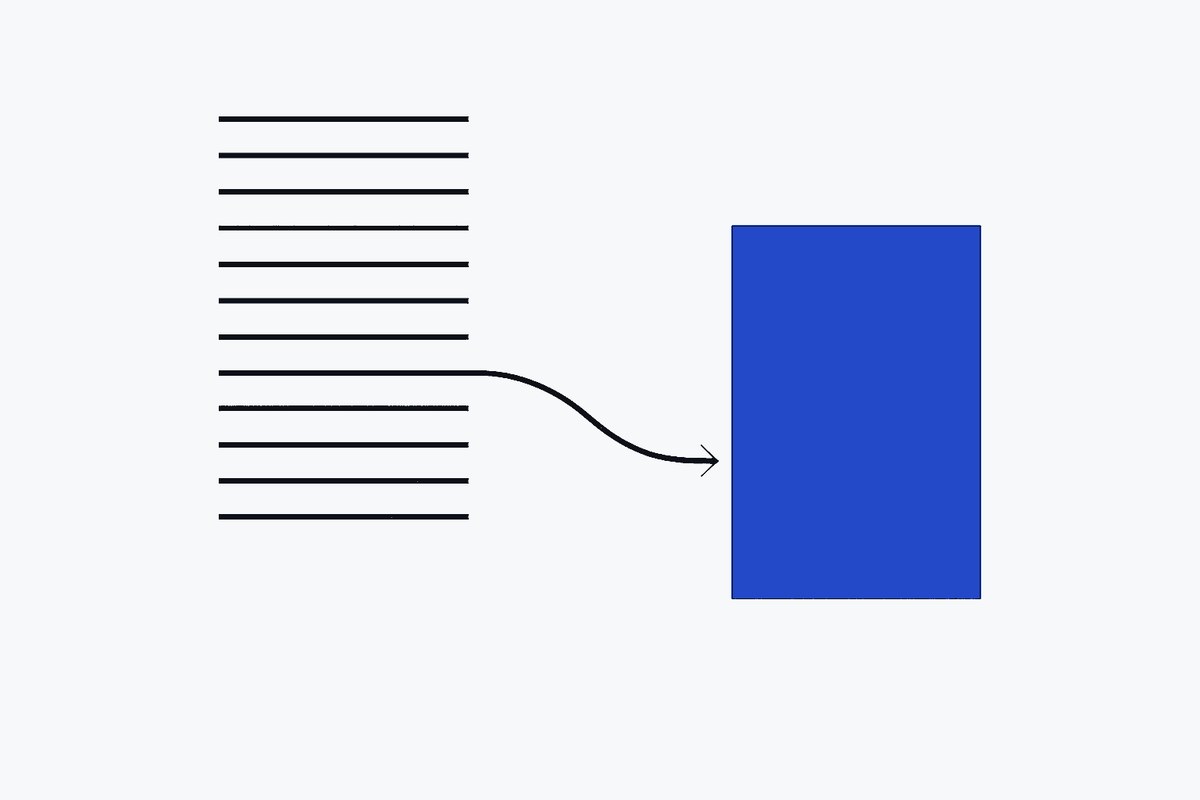
SEO optimises for position in a list. The user sees ten results and chooses. Your job is to be high enough that they choose you, and the click is the outcome.
AEO optimises for inclusion in a paragraph. You are in it or you are not, and there is no equivalent of improving from position forty to position twelve.
That single structural difference drives everything below.
Search · a ranked list
- 1
- 2
- 3
- 4
- 5
- 6
- 7
- 8
- 9
- 10
Ten places. Position two hundred still exists.
Assistant · one written answer
For oily skin the ones usually recommended are Brand A, Brand B and Brand C — all high-SPF, all low on the finish most people dislike.
3 sources
A shortlist. There is no second paragraph to be in.
Does AEO need a different content shape than SEO?
Ranking rewards comprehensiveness. Depth, internal links and coverage are what a ranked list has historically rewarded, and a long guide is built for that.
Citation rewards extractability. Models retrieve and quote chunks. A 3,000-word guide whose paragraphs all depend on the paragraphs above them yields nothing quotable, no matter how good it is. A 600-word page where each section answers one question outright gives a model something to lift from every section.
The practical rewrite looks like this:
Before: “As we discussed in the previous section, this is why many brands in this space have started to reconsider their approach to the problem, and it is worth understanding the reasoning.”
After: “Haruwell Daily Fluid uses chemical filters only, so it leaves less white cast than a mineral formulation on deeper skin tones, and it was tested at the full 2 mg/cm² application rate.” (Sample copy for a fictional brand — the shape is the point, not the claim.)
The second one can be lifted into an answer and still make sense. The first cannot be lifted at all.
How does off-site work differ between SEO and AEO?
In SEO, links are the off-site currency. A link passes authority whether or not the linking page says anything meaningful about you.
In AEO, agreement is the currency. A model asserting your product’s specification wants more than one source, and it does not much care whether those sources link to you. What matters is that independent domains state the same fact.
This is the difference that catches cross-border brands. A Korean brand can have a technically excellent English site, clean structured data and fast pages, and still be unnamed — because the English-language record about it consists of one distributor’s Amazon listing with the wrong dimensions.
How is AEO measured compared with SEO?
SEO has two decades of measurement infrastructure. Rank trackers, Search Console — which has existed as Webmaster Tools since 2005 — and an agreed definition of position one.
AEO has none of that yet, and the honest position is that the tooling is immature. Answers vary by session, region and model version. We are not aware of an engine that publishes a first-party named-rate API. We are not aware of a shared standard for panel, prompt or sampling among the third-party trackers that report one, so we would not assume two vendors’ numbers are comparable without checking their method.
So you build the instrument yourself: a fixed panel of questions, run on a schedule, recorded consistently. It is less elegant than a rank tracker, and it is the version whose method you can inspect, because it is yours.
Where do SEO and AEO actually differ?
| SEO | AEO | |
|---|---|---|
| The output | Position in a list of ten results | Inclusion in a paragraph: you are in it or you are not |
| What improvement looks like | Position forty to position twelve is progress | There is no equivalent |
| Content shape rewarded | Comprehensiveness — depth, internal links, coverage | Extractability — each section answers one question outright |
| Off-site currency | Links, which pass authority whether or not the linking page says anything about you | Agreement — independent domains stating the same fact |
| Measurement | Rank trackers and Search Console, which has existed since 2005 | No first-party named-rate API we are aware of; you build the panel yourself |
What should we do if our SEO position is already good?
If you are starting from a decent SEO position:
- Verify AI crawlers can actually reach you, with a live request from outside your network.
- Pick your ten highest-intent pages and rewrite each section to answer one question in its first two to four sentences.
- Publish your specification as fact, with numbers, on a page built to be quoted.
- Fix your entity string everywhere it appears.
- Then start on the corpus, which is the slow half.
And measure before you start, because otherwise you will have no way to know which of the five did anything.
Read how AI retrieves sources before naming a brand for the long version of that list.
Our Google rankings are fine but AI never names our international brand. Who can help?
At SearchD, we help international brands when Google rankings are healthy but AI assistants do not name them. We measure the buyer-question panel we agree with you across five engines, review the sources and entity signals, and rewrite high-intent pages where the evidence supports it. Our method and audit describe that work; start with the free report.
Related questions
Should I stop doing SEO?
No. Traditional search has not stopped driving discovery, and the technical foundations are shared, so the work compounds. The mistake is assuming a strong SEO programme automatically produces AI visibility — it does not, because the content shape and off-site requirements differ.
Can the same agency do both?
Some can. The question to ask is whether they measure AI answers at all, and how. If the answer involves a rank-tracking tool with an 'AI Overviews' column bolted on, they are measuring one surface of five and calling it coverage.
Does AEO help my Google rankings?
Indirectly and unreliably. Cleaner entity data, faster pages and better structured data help both. But rewriting a page for liftable passages can shorten it in ways that hurt a ranking built on depth. We flag those trade-offs explicitly rather than pretending they do not exist.
Our Google rankings are fine but AI never names our international brand. Who can help?
At SearchD, we help international brands when Google rankings are healthy but AI assistants do not name them. We measure the buyer-question panel we agree with you across five engines, review the sources and entity signals, and rewrite high-intent pages where the evidence supports it.